



Curriculum Planning & Review Benefits
Effective curriculum mapping and design stand as foundational pillars for student success. When curriculum is thoughtfully mapped and aligned—from standards to instruction to assessment—it creates clear pathways for learning that transcend individual classrooms and grade levels.Curriculum Planning & Review Benefits
Districts that implement robust curriculum management practices consistently report stronger student outcomes, more effective teacher collaboration, and better preparation for college and careers. Yet without the right systems in place, this critical work often remains fragmented across schools and departments, leading to gaps in learning and missed opportunities for student growth.
Selecting a curriculum management platform is one of the most impactful decisions school and district leaders make. The right platform partner becomes an extension of your educational mission, shaping how teachers collaborate, how students learn, and how your district achieves its strategic goals.
This guide draws from real experiences of schools and districts that have successfully navigated this initiative, offering practical steps to evaluate, select, and implement a curriculum management solution that serves your unique needs.
Identify Your District's Requirements
Replacing an existing curriculum management solution or implementing your first can be both rewarding and manageable with the right approach. The right curriculum management platform becomes a true partner in achieving student growth and identifying gaps in learning. Look for a partner that demonstrates:- Deep alignment with district vision
- Comprehensive implementation support
- Robust professional development
- Strong customer success approach
- Clear innovation roadmap
- Active community engagement
- Transparent pricing
- Long-term commitment to district success
Evaluating Potential Partners
Use our strategic guide to evaluate potential curriculum management partners.Phase 1: Strategic Foundation
| Planning Area | Key Actions & Considerations |
|---|---|
| Vision Definition | Define specific challenges (curriculum alignment, planning efficiency, achievement gaps) Establish short-term wins and long-term success metrics Align platform capabilities with 3-5 year district strategic plan Consider implementation timing with academic calendar Identify available budget and funding sources |
| Stakeholder Engagement | District Leadership (strategic alignment & budget) Curriculum & Instruction Leaders (pedagogical requirements) Teachers across grades/subjects (classroom practicality) IT Department (technical requirements & integration) Special Education (accessibility needs) CTE Leaders (career pathway integration) Professional Development Team (training plans) Building Administrators (implementation champions) |
| Core Requirements |
Instructional: Standards alignment & tracking Flexible unit planning Lesson planning flexibility Asynchronous learning Assessment integration Differentiation support Cross-curricular connections Career pathway integrationTechnical: LMS integration Google Suite compatibility Data security & privacy System integration capabilities User management Accessibility features Mobile compatibility Reporting capabilities |
Phase 2: Platform Evaluation
| Evaluation Area | Critical Factors |
|---|---|
| Essential Features | Comprehensive standards coverage (state, national, custom) Real-time collaboration tools Flexible curriculum mapping (vertical/horizontal) Assessment integration Data analytics & reporting Curriculum and standards search capabilities In-depth standards analysis Scope and sequence reporting Professional development support Customization options Integration capabilities Security measures |
| Implementation Support | What does the implementation process include? How is training structured and delivered? What's the data migration approach? What ongoing support is provided? How is district feedback incorporated? What professional development options exist? |
| Future-Ready Capabilities | AI enhancement roadmap Personalization features Innovation track record Standards framework adaptability |
| Red Flags | Limited customization Poor integration capabilities Weak security Limited support availability Hidden costs Complex user interfaces Unclear pricing Poor vendor communication Stagnant development Limited success stories |
Phase 3: Program Design
| Component | Strategic Elements |
|---|---|
| Objectives & Timeline | Set specific, measurable goals Create clear success metrics Establish 8-12 week timeline Define key milestones Build feedback mechanisms |
| Participant Selection | Include various teaching styles Represent different grade levels/subjects Mix technology comfort levels Cover key stakeholder groups |
| Success Metrics |
Quantitative: User adoption rates Planning time savings Resource sharing stats Standards alignment completion PD participationQualitative: Teacher satisfaction Ease of use ratings Support quality Implementation feedback Collaboration effectiveness |
Phase 4: Implementation Planning
| Focus Area | Success Elements |
|---|---|
| Timeline Development | Align with academic calendar Schedule PD days strategically Plan teacher preparation time Coordinate technical integration Set data migration windows |
| Support Structure | Identify building-level champions Establish communication channels Create issue resolution protocols Plan celebration milestones Build peer support networks |
| Training Strategy | Initial platform orientation Role-specific training Ongoing skill development Peer mentoring programs Just-in-time resources Advanced feature workshops |
Curriculum Partner Comparison Worksheet
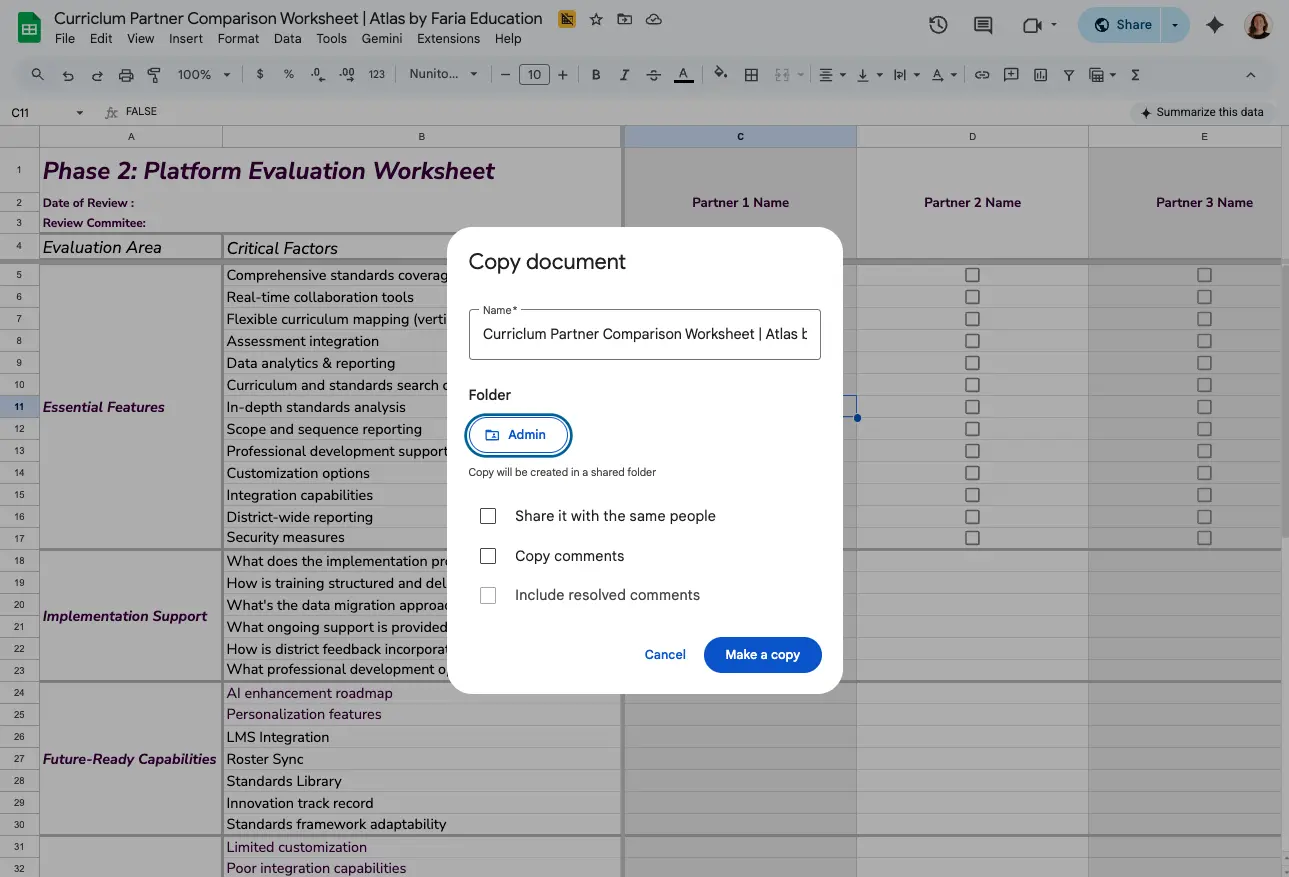
View and make a copy of this google sheet to document your platform comparison efforts.
Want to see how Atlas aligns with your curriculum goals?
Let's start the conversation.