

Case Study:
Curriculum Mapping with Purpose: How Open Door Christian Schools Is Preparing for Accreditation with Atlas
Elyria, Ohio, USA
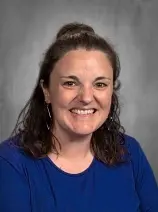
Emily Hawks
Open Door Christian Schools moved from a one-and-done curriculum mapping process toward a multi-year curriculum review plan that supports accreditation readiness, teacher development, and stronger instructional continuity.
The Challenge: Moving Beyond “One and Done” Curriculum Documentation
When Emily Hawks stepped into her role as Director of Teaching and Learning at Open Door Christian Schools, curriculum documentation was already a major action item from the school’s ACSI accreditation process.
The school had used CurriculumTrak for years, but over time the process had become what Emily described as a “one and done type of situation.” Teachers had completed maps, but many had not been meaningfully updated in the platform. By the time accreditation came around, the team realized the maps no longer reflected the full reality of what was being taught.
When our accreditation cycle came around, it was almost like a panic, like, ‘These are bad. Nobody’s updated these in a while.’
– Emily Hawks
At the same time, Open Door Christian Schools was growing. The school had added new teaching sections, experienced staff turnover, and needed a clearer way to support consistency across classrooms. For Emily, that made the curriculum work feel especially urgent. New teachers should not have to walk into a course with little guidance or wonder, “What am I supposed to teach?”
A stronger curriculum process could help teachers build on what came before, instead of reinventing the work each year. It could also give leaders better visibility into what was being taught across grades and classrooms. That is why, for Emily, the work was never just about preparing for accreditation. It was about creating a more intentional, sustainable approach to teaching and learning.
The curriculum mapping process is just honoring the craft of what we’re doing as educators.
– Emily Hawks
The Approach: A Multi-Year Plan That Makes Curriculum Review Manageable
Rather than ask teachers to update every part of every unit at once, Emily created a phased plan that broke the work into manageable yearly priorities.
The plan was designed around the school’s longer accreditation timeline, with the goal of having the curriculum fully updated before the next major accreditation cycle.
Open Door’s curriculum review roadmap
| School Year | Curriculum Review Focus |
|---|---|
| 2025–2026 | Update unit titles and pacing guides for all units in all courses |
| 2026–2027 | Standards alignment and biblical integration for all units in all courses |
| 2027–2028 | Essential questions, content, and skills for all units in all courses |
| 2028–2029 | Assessments, instructional strategies, and resources/materials for all units in all courses |
Emily’s reasoning was practical. If a teacher has several units across several courses, a full template update can quickly become overwhelming. Instead, she focused each year on a small number of unit planning elements, while still allowing teachers to work ahead if they were ready.
I just broke it down, like two things per year.
– Emily Hawks
In the first year, the goal was simple: update unit names and timelines so teachers could look at Atlas and see a clear snapshot of their year. That early visual of their unit overview report helped teachers begin to see the value of the work.
They get to see on one screen, ‘This is your year.’
– Emily Hawks
Emily also built expectations directly into the Atlas unit template, including due dates and guidance for each section. This helped teachers understand what needed to be completed now and what would come later. It also gave Emily a clearer way to “spot check and support teachers” without having to review everything at once.
The Role of Professional Learning: Making Atlas Feel Supportive, Not Compliance-Driven
Open Door’s implementation was not treated as a platform handoff. It was supported by professional learning that helped teachers understand both the tool and the purpose behind the work.
At the beginning of the year, teachers participated in a virtual Atlas workshop focused on the basics: signing in, navigating the platform, understanding what transferred from their previous curriculum mapping software, CurriculumTrak, and getting comfortable. Emily described the fall sessions as “dipping our toe into it,” with time spent cleaning up transferred content and helping teachers make sense of what they were seeing.
Later, Atlas professional learning specialists came onsite for a March professional development day. By that point, Emily had already created the rollout plan and built the unit template guidance. The Atlas professional learning training helped teachers understand the process, work inside Atlas, and ask questions in real time.
Emily said the onsite professional learning made a difference because it gave teachers both structure and dedicated time.
Our Atlas trainer did great… helping with the buy-in, but also giving that tangible work time with an expert right there to help answer questions immediately.
– Emily Hawks
Teacher feedback also showed that time was one of the biggest barriers. Emily noted that dedicated work time, clear expectations, and a narrow focus made the day feel less overwhelming.
Because we put the guardrails on, like, ‘This is what we’re doing today,’ the expectations were set up.
– Emily Hawks
Professional learning also helped shift the tone. Emily had taught alongside many of the school’s veteran teachers before moving into administration, and she recognized that the same message can land differently when it comes from an outside trainer.
To have a different voice saying it has made a difference, even if she’s saying the exact same thing that I’m going to say.
– Emily Hawks
Most importantly, Emily felt the professional learning reinforced that curriculum mapping was not just an administrative requirement.
It helps the process be seen as more about honoring the craft than as a box-checking thing.
– Emily Hawks
The Results and Impact: Early Signs of Stronger Buy-In, Better Conversations, and More Cohesion
Open Door is still early in its multi-year curriculum review plan, so Emily was careful not to overstate the results. But she did describe several early signs that the process is working.
One sign was teacher engagement. Some teachers who Emily did not expect to be especially interested began reaching out with thoughtful questions. Younger teachers, who had been “paving their own way” without much guidance, started seeing that documenting the curriculum could help them.
Another early win came through deeper curriculum conversations. Emily shared the example of a math teacher who began asking about standards, the textbook sequence, and whether they had to teach the standards in the exact order presented by the textbook. That conversation opened the door to an important curriculum principle: the textbook is not the curriculum map.
The curriculum mapping process is not a table of contents in a textbook.
– Emily Hawks
That message, reinforced through Atlas professional learning, gave teachers permission to think more intentionally about what they teach, when they teach it, and why.
Atlas also helped Emily create more consistent guidance. She built a unit planning guide into the template so teachers could see what belonged in each section. For teachers who wanted to work ahead, the guidance acted like a “north star.” For Emily, it created consistency and reduced the need to repeat expectations individually.
No matter what place they’re at, whatever their comfortability, they could see, ‘Okay, I’m ready to go to the next step. I don’t have to wait on Emily.’
– Emily Hawks
Looking Ahead
Looking ahead, Open Door is building Atlas into the rhythm of the school year. Emily adjusted the professional development schedule so that several days include dedicated Atlas work time alongside records-day responsibilities. Rather than treating curriculum review as a once-a-year push, the school is working to make it part of an ongoing cycle of professional learning and curriculum refinement.
I think the rhythm of that, trying to build it into the year rather than it’s a one day in March where we work all day on it thing, is going to help with the culture building as well.
– Emily Hawks
Conclusion
Open Door Christian Schools’ story is not about completing a curriculum mapping task. It is about changing the way curriculum work is understood, supported, and sustained.
By pairing Atlas with a thoughtful multi-year rollout and targeted professional learning, Emily Hawks is helping teachers move from compliance-based documentation toward a clearer, more collaborative curriculum process. The work supports accreditation readiness, but it also serves a deeper instructional purpose: giving teachers a shared structure, helping new and veteran educators build from one another’s work, and making curriculum review feel like part of the craft of teaching rather than another box to check.
Ready to save time and refocus your team on what matters most?
See how Atlas can streamline your curriculum planning and free resources for student learning.
Talk to a Solutions Specialist