

Case Study:
The School Knows Itself Better Than Ever: How Khartoum American School Kept Its Curriculum Alive Amid Crisis
Khartoum, Sudan

Kerry Jacobson
We have been blessed with many wonderful partnerships that have sustained us during this time of exile. The partnership between KAS and Faria Education Group has been one of those key relationships. In this case, we could not have remained KAS without it.
– Kerry Jacobson, Superintendent
Most schools think of their curriculum as something that lives in classrooms. Khartoum American School learned, under the most difficult of circumstances, that it can live anywhere.
When conflict forced the closure of their Sudan campus and displaced their community across borders, their curriculum management system, Atlas, became something far more than a planning tool. It became their most vital resource. test
A School Without Borders
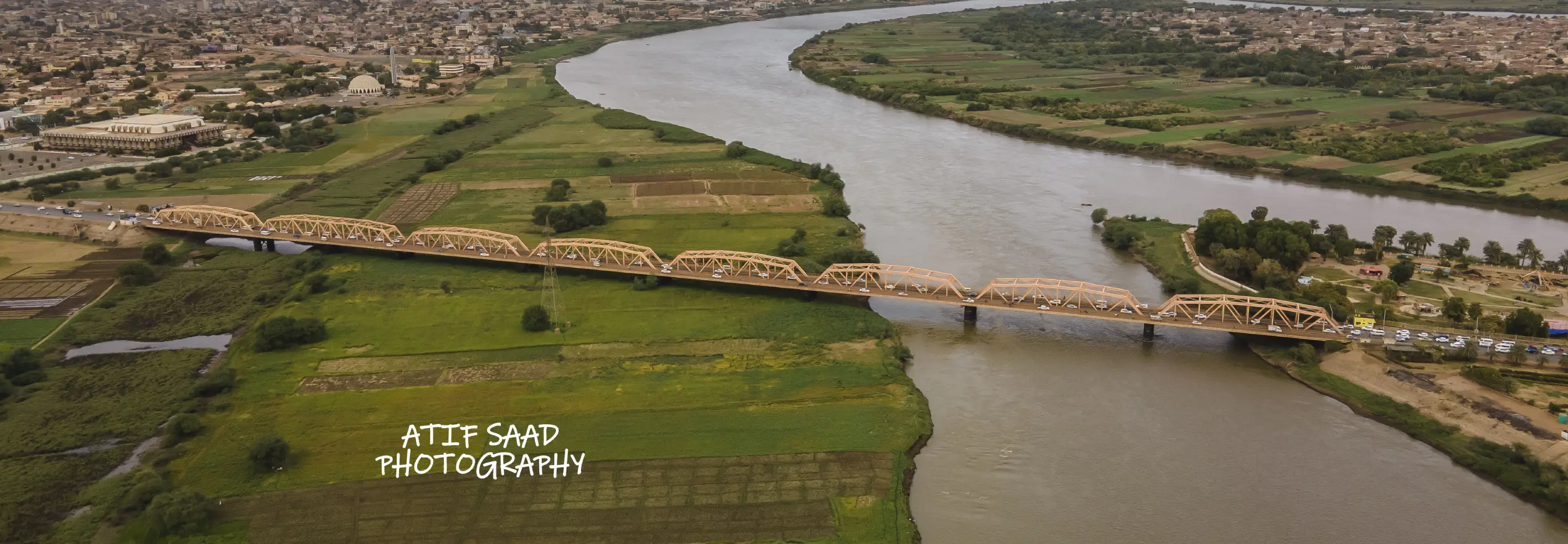
KAS has long prided itself on being an international learning community rooted in Khartoum, a city where the Blue and White Nile converge, a crossroads of cultures and ideas. When displacement forced the school to temporarily resettle with remaining students in Egypt, the community faced a defining question: what does it mean to still be KAS?
The answer, it turned out, lived in their curriculum.
KAS could remain KAS no matter where it went. This was extremely important to the community. Members expressed strong support for 'being KAS'.
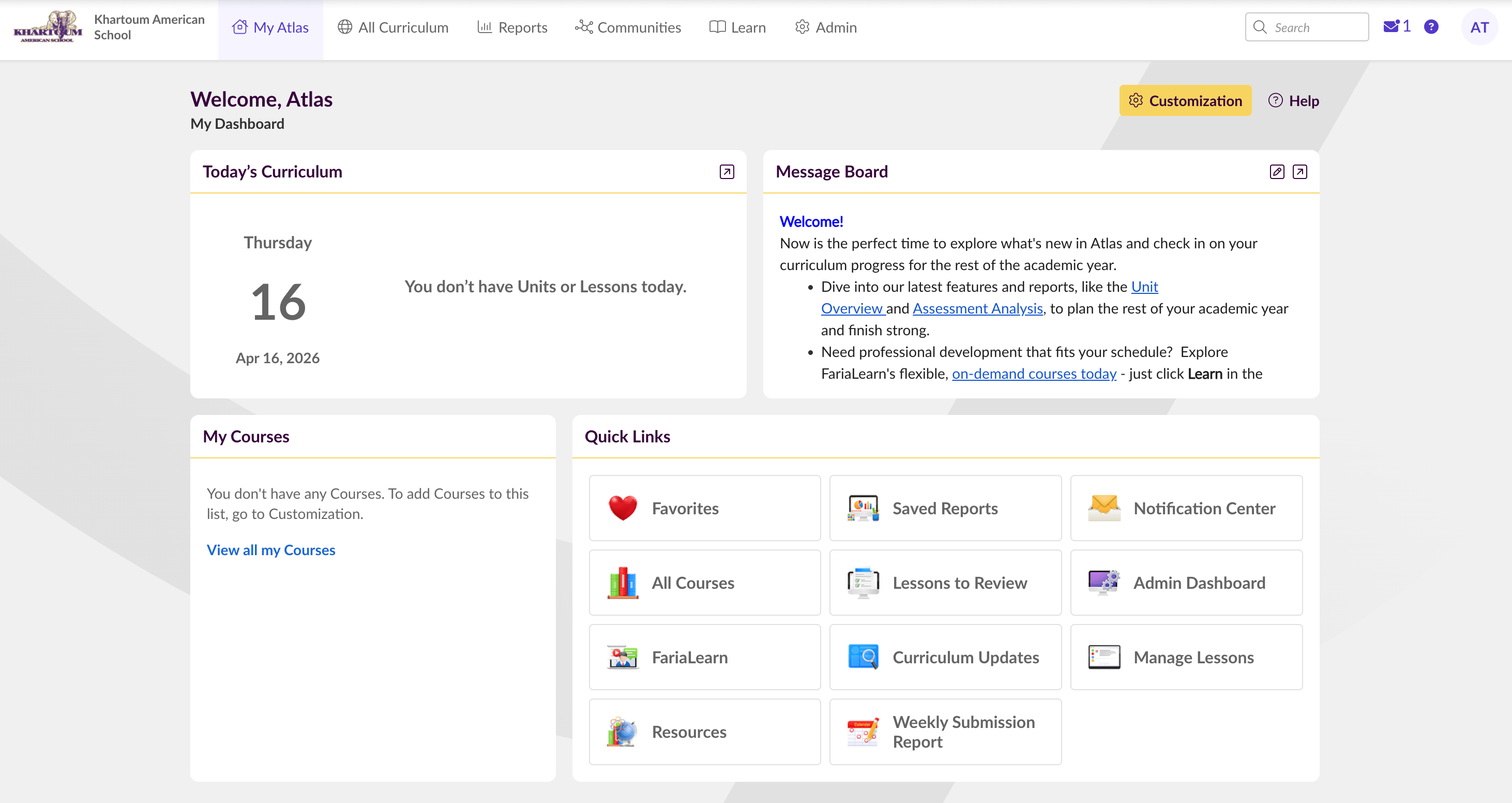
That identity was anchored in Atlas, Faria Education Group's curriculum management platform, which had become the school's digital backbone. While everything tangible was left behind, the curriculum came with them.
When one thinks about it, consider that the staff and students literally had to 'drop everything and run.' Everything tangible was lost. Other than what our teachers carried in their brains and souls, our curriculum on Atlas was the only educational underpinning that came with us. Amazing.
Turning Disruption Into Depth
What KAS did next is a testament to resilience in its truest form. Rather than simply waiting out the crisis, the school used the period of displacement to do something remarkable: they went deeper into their curriculum.
With enrollment reduced to a handful of students per grade, and teachers covering subjects well outside their usual remit, the school stripped its curriculum back to its essentials. It became, as they describe it, a process of "housecleaning."
The teachers had to be resilient and plan lessons for a variety of subjects and grade levels, some of which they had not taught for many years. All of this led to some real housecleaning of our Atlas-based information. It's now much more easily transportable to the classrooms of Khartoum when we return.
The school also turned inward, asking deeper questions about identity: What makes us Sudanese? What makes us KAS? These weren't abstract questions. They shaped how the curriculum was refreshed and rebuilt — leaner, more intentional, more portable.
We have had to address who we are at each stage of exile. The school knows itself better than ever.
The Partnership That Made It Possible
.jpg)
Through its collaboration with Faria Education Group, KAS maintained uninterrupted access to Atlas throughout the crisis, ensuring that no matter what happened to the physical infrastructure, the academic heart of the school remained accessible, editable, and alive.
No matter what happened to the other parts of the infrastructure — facilities, staff members, administration, governance, even finances — FEG made certain that the curriculum could be accessed, edited and used. What a blessing!
The relationship between KAS and FEG is one built on shared commitment to educational continuity, and it proved its worth precisely when it mattered most.
We have been blessed with many wonderful partnerships that have sustained us during this time of exile. The partnership between KAS and Faria Education Group has been one of those key relationships. In this case, we could not have remained KAS without it.
Ready to Return
KAS is planning to reopen its Khartoum campus for the 2026–27 academic year. When the gates open again, the school won't be starting over; it will be stepping forward, grounded in a curriculum that was not only preserved but strengthened.
Just the same as when the school was forced out of Khartoum, the reentry will be facilitated by the existence of and guidance from the Atlas site.
For schools operating in volatile regions, the lesson from KAS is both simple and profound: your curriculum is your most portable, most essential asset. Document it. Protect it. Make it accessible from anywhere.
Take it from us — this centralized documentation has been invaluable. It was a major part of what became known as KAS resilience. The curriculum was something we could access anywhere, at any time, and with whoever needed it.
Atlas by Faria Education Group is a curriculum management platform designed to help schools document, align, and share their academic programs — wherever in the world they find themselves.
Learn more about Atlas