

Case Study:
How Concord Christian connected curriculum mapping to classroom practice
Knoxville, Tennessee, USA

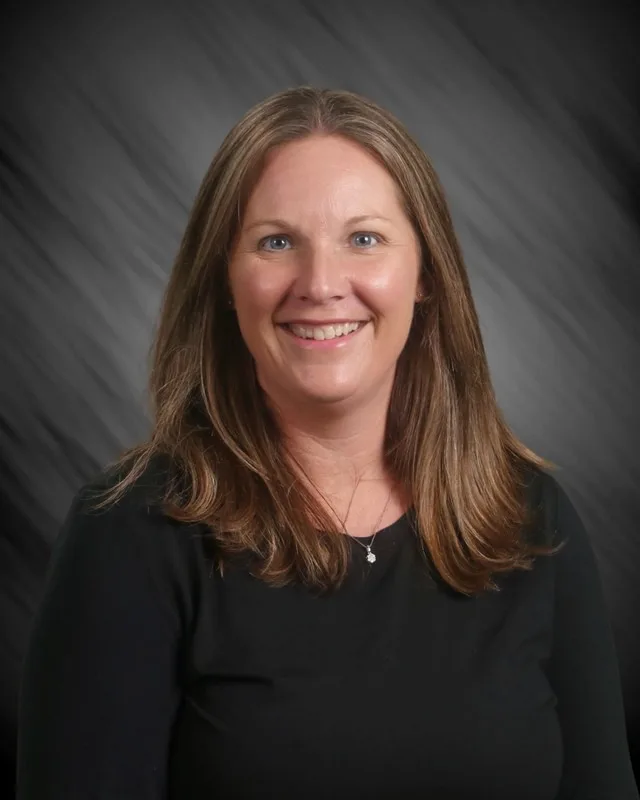
Amy Hamill
Our teachers love our students. Our teachers love what they’re teaching, and they want to grow just as much as the school wants them to grow. Using Atlas allows them to do that in one place.
When Concord Christian School learned that CurriculumTrak was being sunset, the school had to decide what would come next. Staying with CurriculumTrak was no longer an option, but moving to Atlas was not automatic. Atlas represented a larger investment, and school leaders needed to determine whether its expanded capabilities would provide meaningful value for teachers and students.
For Amy Hamill, Academic Dean at Concord Christian School, the decision came down to a practical question: Would the new platform simply hold the school’s curriculum, or would it help educators continually strengthen it?
Atlas gives you the ability to grow and get better as a school. We want to grow and get better as a school constantly, so it really was a no-brainer to invest in the program and the additional professional development. There are just so many benefits.
– Amy Hamill, Academic Dean, Concord Christian School
Choosing a platform that could support the school’s next stage
Concord Christian School serves more than 1,000 students in kindergarten through grade 12. As Academic Dean, Amy oversees professional development as well as the documentation of curriculum and standards across the school.
Concord knew it needed to move away from CurriculumTrak, but the school did not rush its decision. Leaders spent approximately a year exploring their options and considering what teachers and administrators would need from a new platform.
Several factors helped Concord choose Atlas:
A more user-friendly experience for teachers
Migration of the school’s existing maps, units, and standards
Connections among curriculum mapping, standards, and lesson planning
Reporting that could help leaders examine standards coverage
Compatibility with the school’s Blackbaud SIS and LMS environment
Access to implementation support, onsite professional learning, and coaching
We knew we had to switch, and we explored our options, but it felt like nothing really compared to Atlas. It was, ‘Wow, look at all these things. Look at all these benefits. Yes, this is what we want to do.’
– Amy Hamill, Academic Dean, Concord Christian School
Moving beyond curriculum storage
Concord had used CurriculumTrak to document its curriculum, but Amy saw an opportunity to make curriculum mapping a more active part of teaching and school improvement.
With Atlas, the school can bring curriculum maps and lesson plans into a more connected process. Teachers can create a unit, attach standards to it, and carry those standards into their lesson plans. Administrators can then use reports to examine how standards appear across the curriculum.
“We’re able to not only store our mapping in there, but also store our lesson plans. We can include our standards in our daily lessons, weekly lessons, and assessments.”
For Amy, this visibility matters because confirming that a standard appears somewhere in the curriculum does not show whether students have had enough opportunities to learn and apply it.
A report might reveal that one standard appears frequently while another is addressed only once or twice. That information can prompt deeper questions about curriculum, instruction, and student learning.
“You don’t always think about how many times you covered a certain standard. You just want to make sure you covered it. This should help us balance what we’re teaching a little better.”
Rather than treating the curriculum map as a completed document, Concord intends to use it to support ongoing conversations:
Which standards are receiving enough instructional attention?
Which standards may need to be addressed more consistently?
Where might students encounter gaps between grade levels?
Does a gap require a curriculum change or an instructional adjustment?
Where would additional resources or professional learning be helpful?
Curriculum is a tool—not the standard
Concord’s approach begins with a clear instructional principle: adopting a textbook or published curriculum does not remove the need for professional curriculum work.
“No curriculum is perfect, and no curriculum is going to meet all of the standards. We tell teachers that the curriculum is a tool to meet the standards.”
Teachers may use a textbook as an important resource, but they still need to understand the standards, recognize what their students need, and adjust instruction accordingly.
Each class is different, and students’ needs can change throughout the year. Maintaining an up-to-date curriculum gives teachers a foundation for responding to those changes without losing sight of the learning goals students are expected to master.
“We’re the educators. We are the ones who know how our audience is receiving this. If we’re just reading from a textbook, then we’ve missed our audience.”
This philosophy makes curriculum mapping more than a documentation exercise. It becomes a way for teachers to reflect on the relationship among standards, resources, lessons, assessments, and the students currently in front of them.
Implementation: Starting with lead teachers
With a large K–12 teaching staff, Concord needed a manageable implementation plan. The school began with two summer training sessions for lead teachers, who could then serve as internal point people. Additional training followed once the school year began.
“We had two trainings over the summer for our lead teachers, so they were going to be point people.”
This approach gave teachers colleagues within the school they could turn to as questions arose. It also allowed Concord to move beyond introductory training and address the more detailed questions that emerge when teachers begin applying Atlas to their own curriculum.
Concord has also completed onsite professional learning and is continuing to work with the FariaLearn professional learning team through coaching and additional support.
“We didn’t want our teachers to just use Atlas. We wanted them to utilize Atlas.”
For Concord, that distinction is important. Entering information into a platform does not automatically improve curriculum. Teachers need time and support to understand how to connect the platform to their actual work.
Preserving previous work while encouraging ownership
Concord’s existing curriculum maps, units, and standards were migrated into Atlas, so teachers did not have to rebuild everything from the beginning.
“The data just all came over seamlessly. They didn’t have to start everything from the beginning.”
At the same time, Concord did not want teachers to treat the migrated curriculum as finished. Some teachers asked Amy to create blank maps so they could carry forward the strongest parts of their previous work while revising what no longer served them.
“They want to make it better. They want to make it work for them and to help them.”
This created a useful balance: preserve previous work so teachers are not overwhelmed, while giving them the space and ownership to refine it.
Amy has already seen teachers become more interested in maintaining and improving their maps. Rather than completing them once as a compliance task, teachers are beginning to see how the information can support their planning.
I think our mapping is going to be very up-to-date, where in CurriculumTrak it really wasn’t. They’re able to utilize this, and they’re actually getting excited about it.
– Amy Hamill, Academic Dean, Concord Christian School
Establishing a manageable first-year goal
Concord is not asking teachers to master every Atlas capability during the first year. The school has established a focused goal: teachers should have their lesson plans in Atlas with the relevant standards connected to their units and lessons.
Once that foundation is in place, administrators can begin using reports to examine which standards are being taught and where additional development may be needed.
This phased approach makes the work more manageable for teachers while still moving the school toward a more complete view of its curriculum.
“By the end of the year, we want all of our teachers to have their lesson plans in Atlas and have their standards attached to those units and lesson plans.”
Connecting curriculum work to student progression
Amy sees standards visibility as essential to helping students transition successfully from one grade to the next.
If teachers and administrators can identify where a standard has received limited attention, they can address the issue before it becomes a larger learning gap. This does not mean every student will progress in exactly the same way, but it can strengthen the overall coherence of the school’s instructional program.
“If standards aren’t covered enough, students haven’t mastered them, and they can’t move on to the next level.”
When students advance with significant gaps, the next teacher must spend time reteaching previous content before moving forward. Concord hopes that a clearer view of standards coverage will help teachers build more intentionally from one grade level to the next.
If you have to fill in holes, then you’re not going to get as far that year. But if you can see what standards need to be taught more or less, you can send students forward prepared to continue building.
– Amy Hamill, Academic Dean, Concord Christian School
Why Concord believes the investment is worthwhile
For Concord, the value of Atlas is not based on one isolated feature. It comes from bringing curriculum maps, standards, units, lesson planning, resources, collaboration, and reporting into a more connected process.
Teachers previously kept different parts of their work in different places. A curriculum map might be in CurriculumTrak, lesson plans in Google Drive, and resources or communication in other systems.
Atlas gives the school an opportunity to reduce that fragmentation while creating stronger connections between curriculum planning and classroom instruction.
“It gives teachers the freedom of staying in one place to do all those things. It’s worth the money for teachers to have that comfort, that benefit, and all those opportunities available to them.”
The investment in professional learning is part of the same decision. Concord did not want to purchase a more capable platform and then leave teachers to discover its value on their own. The school paired the technology with training, internal leadership, onsite support, coaching, and realistic implementation goals.
A foundation for continued improvement
Concord Christian School is still early in its Atlas journey. Its story is not about claiming that implementation is finished or that every outcome has already been achieved. It is about creating the conditions for thoughtful, sustained curriculum improvement.
The school has preserved its previous curriculum work, established clear first-year goals, built teacher leadership, invested in continued professional learning, and connected its implementation plan to student progression.
Most importantly, Concord is treating curriculum as something educators continually examine and refine.
Our teachers love our students. Our teachers love what they’re teaching, and they want to grow just as much as the school wants them to grow. Using Atlas allows them to do that in one place.
– Amy Hamill, Academic Dean, Concord Christian School
Ready to move from curriculum storage to continuous improvement?
See how Atlas can help your school connect curriculum maps, standards, and lesson plans so teachers can put shared learning goals into practice every day.
Talk to a Solutions Specialist